
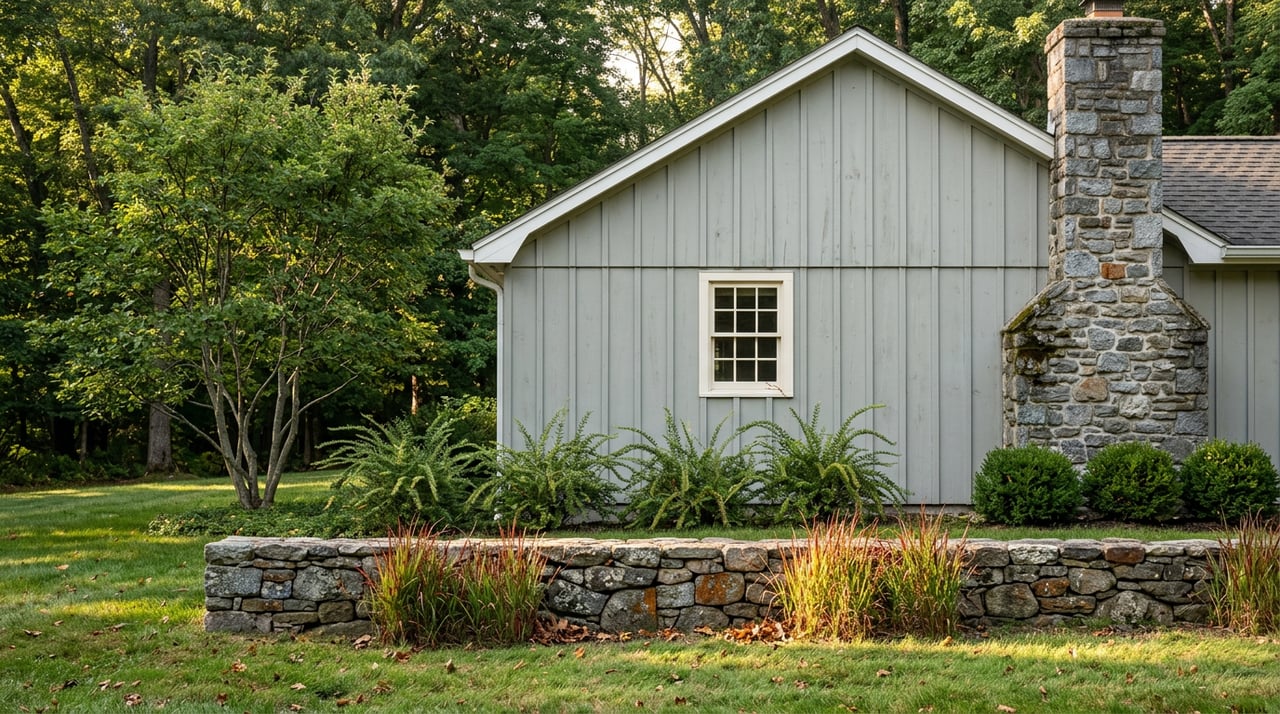
Drive through Weston looking for a downtown and you will not find one. No strip of storefronts, no central block of shops with awnings, no corner where three generations of a family business share a parking lot. The town's zoning has kept it that way on purpose for decades: large lots, working farms, stone walls instead of sidewalks. What Weston has instead is a single recurring appointment. Once a month, on the last Friday, cars turn up High Acre Road and the fields at Lachat Town Farm fill with the kind of foot traffic a town without a commercial district otherwise never gets to see all in one place.
That is not a small distinction. It means the market is not a nice extra on top of an existing town center. It is functioning as the town center, four evenings a year, and understanding why tells you more about how Weston actually operates than any list of amenities would.
A Working Farm First, an Event Venue Second
Lachat Town Farm sits on land once known as the Julia Lachat Preserve, and the market is only the most visible thing happening there. The farm runs a Summer Farmhands program weekly from June 15 through August 14, brings on high school interns each spring, and runs a summer CIT program for teens who want more responsibility than a typical seasonal job offers. None of that is staged for market night. It is the actual operating model of the place, and the market is the evening a working farm opens its gates to people who otherwise wouldn't have a reason to drive up.
The rest of the calendar backs this up. Yoga and meditation happen there most Saturday mornings. Tai chi meets the second and fourth Saturday of every month. A knitting circle convenes the third Wednesday. None of these draw a crowd the size of market night, but together they describe a piece of land doing the job a town green or a Main Street storefront would do in a place built differently: giving residents a reason to show up on a Tuesday as well as a Friday.
What the Vendor List Tells You About a Town With No Storefronts
The vendor list for this year's markets reads less like a shopping trip and more like a directory of businesses that have found a workaround for not having anywhere permanent to sell. Baked in Weston, a sourdough bakery run out of the town itself, brings loaves in white, whole wheat, oat porridge, rye, and a walnut cranberry variety, all made from a natural starter with no commercial storefront to walk into on an ordinary Tuesday. Momu, which does have a physical shop, keeps it in Westport, so a Weston market night is the only chance to get its scoops and cones without leaving town. Grumpy Dumpling hand-folds every dumpling it sells and shows up only when the market does. RastaRant, founded by chef GiGi Lawrence, brings Caribbean vegan cooking she started learning at age eight in Kingston, Jamaica, with no fixed address of its own in the area. Honey Bee Flower Truck sells out of a truck because a truck is the business. Agape Premium pours single-origin Greek olive oil from family groves in Messinia and has spent more than sixteen years traveling the Westchester County market circuit and beyond rather than leasing a shop anywhere. Palmer Pages, a Weston-based business, sells pre-loved books wrapped blind, with only a teaser on the outside, and a market table is exactly the kind of low-overhead spot that idea needs.
Every one of these is mobile, seasonal, or home-based. That's not a coincidence of small-business economics. It's what happens in a town where the zoning simply never carved out space for a commercial strip, so the businesses that do exist have built themselves around trucks, pop-ups, and one Friday a month rather than a lease.
Four Fridays, Then It Disappears
The market's own description places its season from June through September, held the last Friday of each month, four to eight in the evening. The most recently confirmed date on the farm's calendar is August 28, running the same four-to-eight window, with live music as part of every installment. That scarcity is the point as much as the produce is. This isn't a weekly farmers market that a resident can take for granted the way someone in a town with an actual Main Street might take a corner cafe for granted. It's four nights, spread across a summer, and if a resident misses one, the next chance is a month away or gone until next June.
The rhythm doesn't fully stop when the market season ends either. It hands off. A separate Winter Farmers Market convenes at the Norfield Grange on Good Hill Road once the Lachat season wraps, meaning even the commercial pulse of the town migrates between two different locations rather than living in one fixed spot year round. A town with a real downtown doesn't need to pass that torch. Weston does, because there's nowhere for the torch to just sit.
One more date worth marking on the same calendar: Lachat is hosting a Longest Table community dinner on Sunday, September 13, part of a national movement that brings neighbors together for a shared meal at one long table. It's a separate event from the farmers markets, but it's happening on the same land, organized by the same instinct that turns a working farm into the closest thing the town has to a public square.
The Weekend's Other Half
If Friday night belongs to Lachat, the rest of the weekend in Weston tends to belong to two preserves that do for daytime what the farm does after dark: give people somewhere to go that isn't a store.
The Lucius Pond Ordway Devil's Den Preserve spans Weston and Redding across 1,746 acres, making it the largest preserve in Fairfield County. It carries roughly 20 miles of trails past features with their own names and their own reasons to visit: Godfrey Pond, a mill pond dating to the 1700s, the Saugatuck Wildlife Refuge, a shrubby marsh along the West Branch of the Saugatuck River, the Great Ledge, a high rock formation with a wide view, and Ambler Gorge, a ravine with a rocky stream cascade. A few miles away, the Katharine Ordway Preserve at 165 Goodhill Road offers a smaller, quieter alternative: three miles of trails across 62 acres, plus an arboretum, for a shorter walk on a morning when 20 miles feels like too much.
Neither preserve replaces what a downtown gives a town. But between the two of them and a working farm that opens its gates once a month, Weston has built a version of public life that doesn't look like anyone else's in lower Fairfield County. It doesn't run on storefronts. It runs on land the town decided to keep open, and on the handful of nights and mornings a year when that land does the job a commercial district would otherwise be asked to do.
That's worth knowing if you already live here, if only because it explains something about the town you may have felt without being able to name it. Weston isn't missing a center. It just built one that only shows up on the calendar a few times a year, and disappears again the moment the season turns.
If Weston's rhythms are the reason you're glad to already be here, or the reason someone you know keeps asking what it's actually like to live in this town, Karen Cross has spent her career paying attention to exactly this kind of detail across lower Fairfield County. Reach out anytime to talk through what else makes this market tick.