
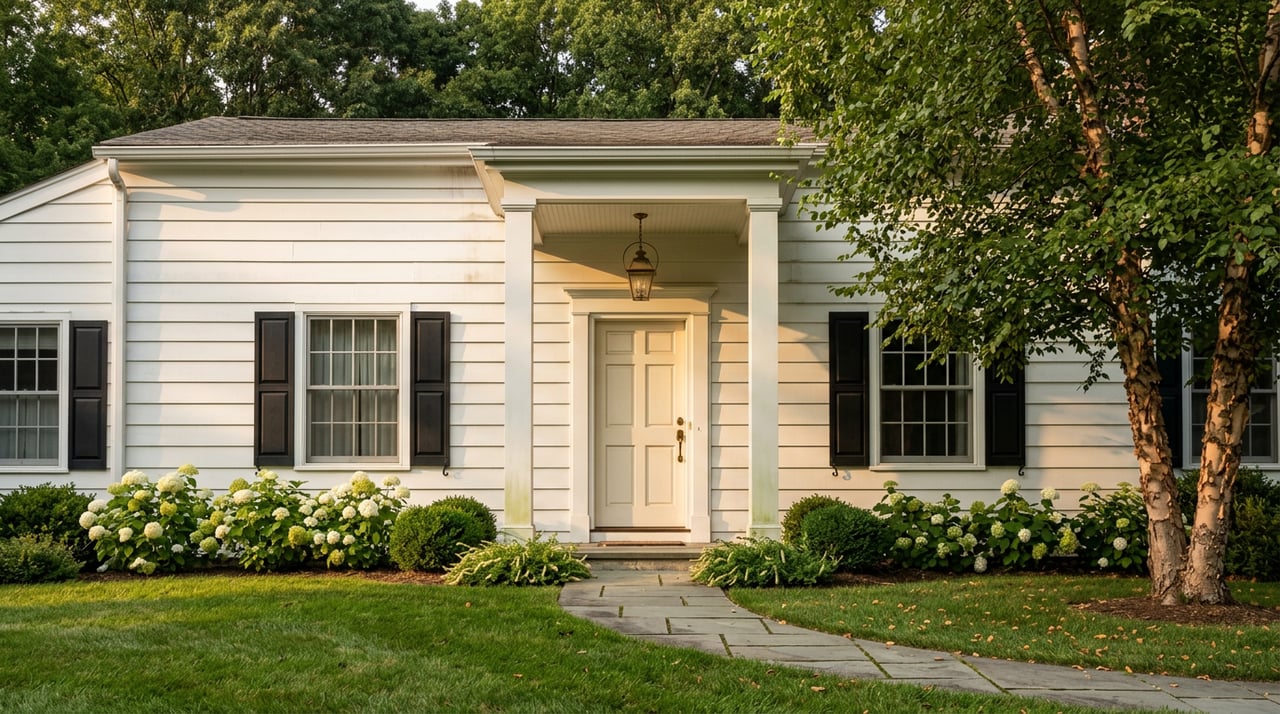
Two houses on the same block in Fairfield's Lake Hills neighborhood can share a property line, back up to the same stretch of Samp Mortar Lake, and list within a few thousand dollars of each other. Only one of them comes with a legal right to swim there.
That is not a metaphor about neighborhood character or school catchment lines. It is a literal distinction written into the chain of title. In Lake Hills, the right to use one of the five private beaches on Samp Mortar Lake is not a neighborhood amenity that comes with living inside a boundary line the way a homeowners association pool might. It is attached, or not attached, parcel by parcel, and the difference lives in the deed itself rather than in the listing sheet, the neighborhood's reputation, or what the house next door happens to enjoy.
For a buyer comparing two nearly identical homes in this part of Fairfield, that distinction is worth more than a walk-through. For a seller, it is a disclosure question that needs an answer before the sign goes in the yard.
A Neighborhood Built Around Water the Town No Longer Drinks
Lake Hills sits in the northern part of Fairfield, straddling both sides of Black Rock Turnpike, and was established in 1952. The neighborhood spans more than 480 acres, includes over 500 homes, and sets aside roughly 80 acres as common land. Its center of gravity is Samp Mortar Lake, a 47-acre reservoir formed in 1901 when a dam was built on the Mill River. The reservoir once supplied drinking water to parts of town. It no longer serves that purpose, which is a large part of why the shoreline today is organized around recreation instead of infrastructure.
The private entity that manages that shoreline is the Lake Hills Association. It controls five member beaches along the lake, each identified by a posted sign: Beach 1 on Tahmore Drive, Beach 2 on Samp Mortar Drive, Beach 3 on Mountain Laurel Road, Beach 4 on Winnepoge Drive, and Beach 6 on Sasapequan Road. There is no numbered Beach 5. Nobody seems to know why, and it is the kind of detail that tells you this is a real, decades-old community structure rather than a marketing label invented for a listing description.
Why the Same Street Can Split Two Ways
Here is the part that catches buyers off guard. Eligibility to join the Lake Hills Association is written into the homeownership deed for parcels within the association's defined area, according to the association's own bylaws. But that eligibility is not uniform. For some parcels, membership is mandatory and the right is deeded, meaning it is a real property right that passes automatically to whoever buys the house next. For other parcels nearby, joining is optional. The current owner can choose to participate, but the arrangement functions more like a membership contract than a recorded easement.
That second category is where the friction sits. If a right is deeded, it transfers with the title the way a driveway easement would. If it is opt-in, the next owner's standing is a separate question, one that depends on how the association's rules and the recorded deed language actually treat succession. This is not something a buyer should infer from the seller's description of "beach access" in the listing remarks. It is something an attorney should confirm by reading the deed and the association's governing documents before an offer goes in, not after closing.
Annual dues for members are commonly cited around $400, though the exact figure and any parcel-specific fee structure should be confirmed directly with the association or through the seller's disclosure at the time of sale, since dues schedules can change year to year.
What Membership Actually Includes
For parcels where the right is deeded or the current owner has opted in, Lake Hills Association membership is not limited to sand and water. It includes:
- Access to all five member beaches on Samp Mortar Lake
- Swim lessons offered at multiple skill levels
- Storage for kayaks, canoes, and other watercraft
- A playground and a baseball field within the common areas
- Walking trails through the association's shared land
- A recurring calendar that includes an annual Fishing Derby, a Fall Fest, and seasonal movie nights and live music at the beaches
That calendar is not incidental to the value question. A family buying into a deeded parcel is buying into the Fall Fest, the Fishing Derby, and the swim dock along with the house. A family buying into a house without the right is buying a home near a lake they cannot legally use without separately confirming their own standing with the association.
Not the Same System as the Town Beaches
It helps to understand how unusual this arrangement is even within Fairfield. The town's Long Island Sound beaches, Jennings, Penfield, Sasco, South Pine Creek, and Southport, operate under a completely different structure. Access there is governed by the town's own beach ordinance, Chapter 50 of Fairfield's town code, which puts the Parks and Recreation Commission in charge of a seasonal sticker system available to residents and taxpaying property owners. There is no deed involved. A homeowner anywhere in Fairfield can generally qualify for a resident sticker without any connection to a specific parcel's title history.
Lake Hills works the other way entirely. The right does not follow residency in the town. It follows the specific parcel, and only the specific parcel, based on language recorded decades ago. A few hundred feet from the association's beaches sits the Samp Mortar Rock Historical Site, a 7.3-acre town open space parcel the town acquired in 1966 and accesses from Springer Road. That land is open to any member of the public who wants to hike its trails. The lake beaches a short walk away are not, unless your deed says otherwise. Two kinds of public land use, separated by a property line, inside the same square mile.
What to Confirm Before You Write an Offer
If a Lake Hills property is on your list this fall, the beach right is worth treating as its own line item in due diligence, not an assumption baked into the neighborhood's reputation. A few concrete steps:
- Ask your attorney to pull the recorded deed language for the specific parcel, not a neighboring one, and confirm whether the association right is described as mandatory, optional, or absent.
- Request the seller's HOA or association disclosure, including the current annual dues and whether any assessments are pending.
- If the right is opt-in rather than deeded, ask the association directly whether membership transfers with a sale or requires a fresh application from the new owner.
- Do not rely on a listing description that says "beach rights" without a citation to the deed. That phrase alone does not tell you which category the parcel falls into.
None of this is a reason to avoid the neighborhood. Lake Hills has held its value and its community character for more than seventy years precisely because the structure is stable and well understood by people who live there. It is a reason to ask a sharper question than most buyers think to ask, and to have your attorney answer it in writing before you are past your inspection contingency.
Frequently Asked Questions
Is Lake Hills Association membership required for everyone in the neighborhood? No. Eligibility depends on the specific parcel's deed. Some homes carry a mandatory, deeded right. Others fall into an optional category where the current owner has chosen to join.
Do the beach rights automatically transfer to a new buyer? On parcels where the right is deeded, yes, in the same way an easement would pass with title. On opt-in parcels, the terms of transfer depend on the association's own rules and should be confirmed before closing rather than assumed.
What do the annual dues cover? Membership typically covers access to the five lake beaches, swim lessons, watercraft storage, and the association's recurring events, including the Fishing Derby and Fall Fest. Dues are commonly cited around $400 a year, but the current figure should come from the association or the seller's disclosure.
Is this the same as Fairfield's town beach stickers? No. Fairfield's Sound-side beaches operate under a town ordinance and a seasonal sticker system tied to residency, not to a specific parcel's deed. Lake Hills is a private association whose rights are recorded property by property.
A house with a deeded beach right and a house without one can look identical from the street. The difference shows up in the paperwork, and it is worth having someone who reads that paperwork for a living look at it before you commit to either one. If you are weighing a purchase or a sale in Lake Hills or anywhere else in Fairfield, Karen Cross can walk the deed language with you and help you understand exactly what you are buying. Request an Instant Home Valuation to start the conversation.